Pool Decks

Concrete pool decks in Long Beach and Lakewood

A quality pool deck should combine durability, safety, and style. We build and replace pool decks using materials designed to withstand moisture, chlorine, sunlight, and temperature changes without becoming slick.

Typical time
1 to 3 days
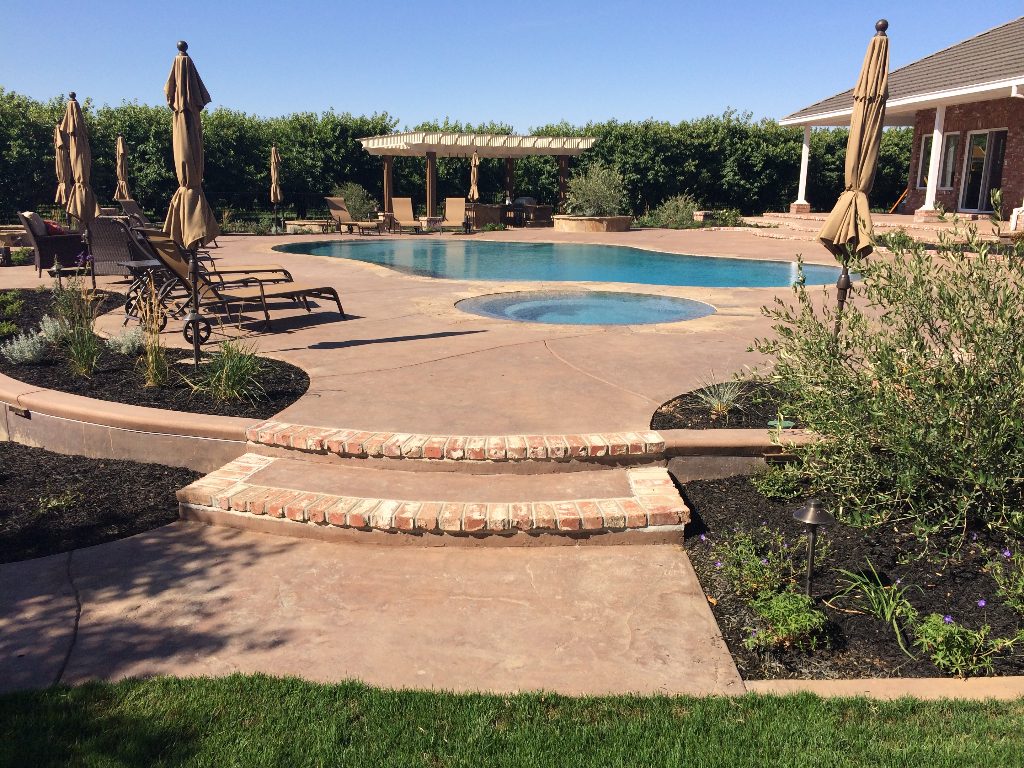
Colored concrete pool deck and wide curved steps leading down to the pool

What pool decks covers

Demolition and base preparation

  • Saw-cutting along the coping to protect pool plaster and plumbing
  • Break-out and haul-away of cracked or sunken existing pool deck concrete
  • Compacting the aggregate sub-base to prevent ground settling
  • Grading the surface slope away from the water edge toward yard drainage
Slab structure and joints

  • 4-inch reinforced slab with steel rebar grid on chairs
  • Flexible expansion joints between deck and coping to isolate deck movement
  • Clean tooled control joints placed to manage curing contraction
  • Forming curved edges, steps, and transitions to adjacent patio areas

Surface finish and protection

  • Broom, exposed aggregate, stamped, or colored concrete finish options
  • Non-slip grip additive blended into surface sealers for wet foot traction
  • Penetrating sealer formulated for pool splash, chlorine, and UV sunlight
  • Thorough job site cleanup, form removal, and inspection

How the work goes

  1. 01Consultation and layoutWe review existing coping condition, drainage slope, deck dimensions, and your preferred surface finish on site.
  2. 02Demolition and base compactionOld concrete is carefully removed without disturbing the pool structure, followed by base preparation.
  3. 03Forming, steel, and expansion jointsWe set forms, install coping expansion material, and chair the steel rebar grid above the soil.
  4. 04Pouring, finishing, and sealingConcrete is placed, leveled, textured for slip resistance, and sealed once cured.
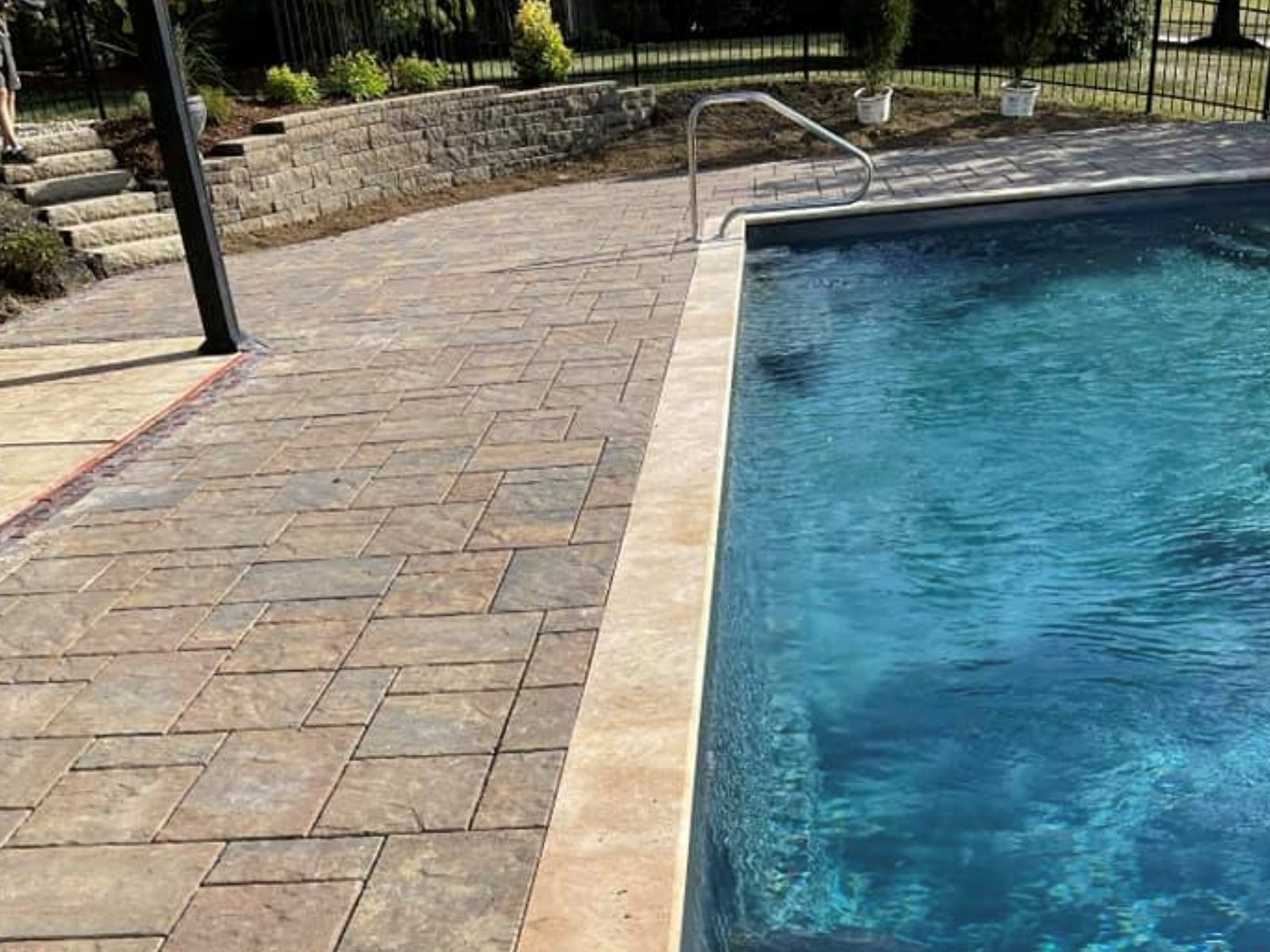
Paver pool deck with a bullnose coping edge along the pool

Why clients choose us

Slip-resistant textures

We apply broom textures, exposed aggregate, or textured sealers with non-slip additives for safe poolside footing.

Coping protection

Flexible isolation joints allow the deck to expand and contract without pushing against pool tile or bond beams.

Heat-reflective options

Lighter integral colors and broom finishes stay significantly cooler under the Southern California sun.

Clear written quotes

Every estimate specifies exact slab thickness, base preparation, expansion joints, and surface treatments.

Add-ons

  • Non-slip grip additive in clear protective sealer
  • Colored concrete or integral pigment tinting
  • Bullnose coping coordination and edge transitions
  • Drainage channel and catch basin installation
  • Curved pool steps and sun shelf transitions

Before we start

  • Ensure clear side-yard access for crew and wheelbarrows to the backyard pool area.
  • Cover pool water surface or lower water level slightly if demo work borders the coping.
  • Confirm pool plumbing and electrical lines near the deck perimeter before excavation.

Questions people ask

Call (657) 300-7519 for anything else.

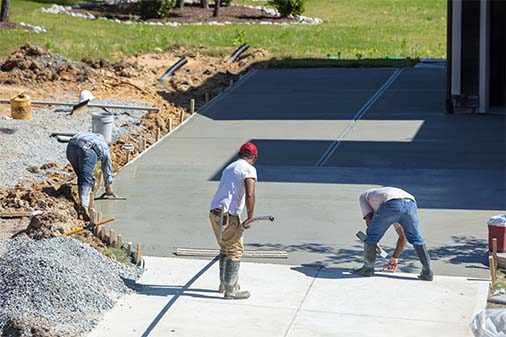
Three-person crew raking base and finishing a new slab next to the house

Which pool deck finish stays coolest in the sun?

Lighter colors reflect heat best. Light broom finish, natural gray concrete, and light-toned pavers stay noticeably cooler than dark stamped concrete under direct afternoon sun.

Can you replace a pool deck without damaging the pool coping?

Yes. We saw-cut clean isolation lines along the coping edge and protect coping tile during demolition and pouring.

Is stamped concrete slippery around a swimming pool?

Smooth stamped concrete can become slippery when wet. We add a fine slip-resistant grit additive to the sealer and maintain texture depth to ensure safe footing.

How long before we can swim after a pool deck pour?

Light foot traffic is allowed after 24 to 48 hours. Avoid splashing water onto the deck while the concrete and topical sealer are curing.

Why are expansion joints required around pool coping?

Concrete expands with heat and contracts in cooler weather. An expansion joint between the deck and coping prevents the expanding deck from cracking the pool bond beam.